Water Heater Leak Cleanup in Tucson, AZ
The laundry room floor was wet on Tuesday and you blamed the washer. On Thursday the hall carpet was damp at the seam. The water heater in the closet had been weeping from the bottom seam for a week, quietly, into the slab and under the wall. Tanks in Tucson rarely make it past ten years; the minerals in the water see to that. This site routes your call to an independent local provider who handles water heater leak cleanup across Tucson and Pima County.
Following the water from the tank into the walls
A water heater sits on the slab, so its water goes sideways. In a laundry closet it runs under the door into the hall. In a garage it runs toward the drain or under the wall into the adjoining bedroom. In the outdoor alcove common on 1960s and 1970s ranches, it soaks the sill plate of the shared wall and the drywall on the inside face. The provider meters every wall that touches the tank's location, on both sides, and reads the floor of every adjoining room.
Pumping standing water is water extraction. Then the baseboards near the tank come off, the drywall gets a flood cut where the meter says it wicked, and the drying equipment goes in. Tanks that failed in a hall closet with an upstairs above them are rare in Tucson; the ceiling problem here is the ceiling water damage repair that comes from the cooler on the roof.
Shut off the tank in the next five minutes
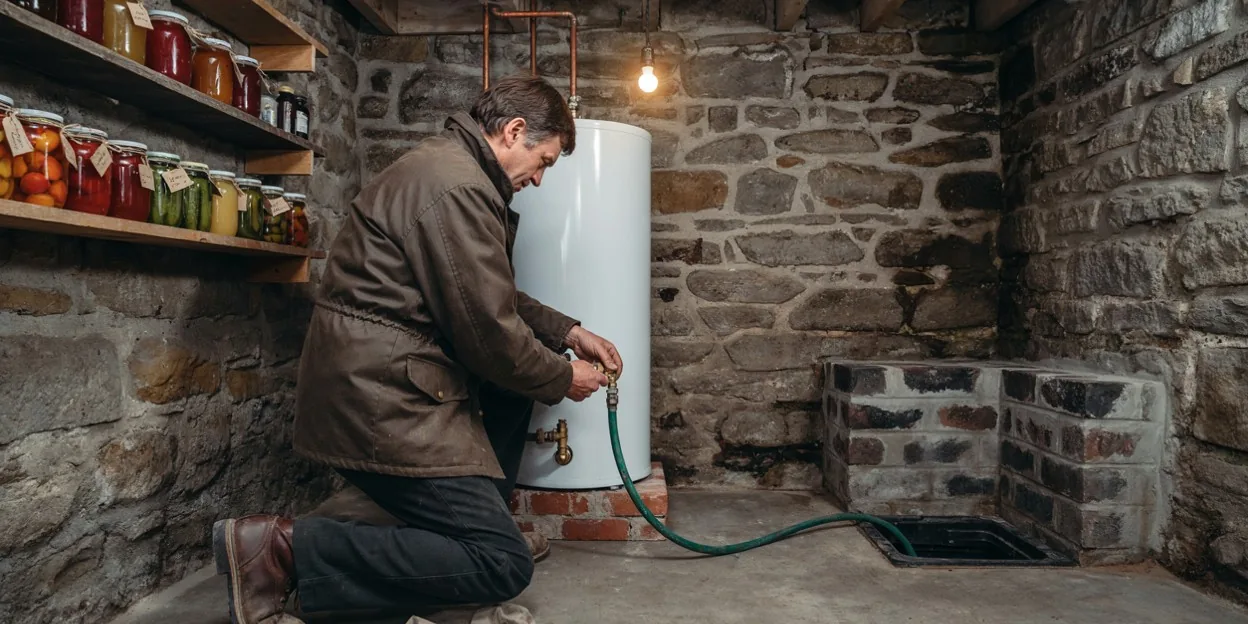
Find the cold-water line on top of the tank and close its valve. Set the gas control to off, or trip the breaker if the unit is electric. If the tank is still draining onto the floor, run a hose from the drain valve at the bottom to the yard. Move whatever is stacked around the tank out of the water and photograph the base, the floor, and the wall behind it. Then call.
What comes out and what stays after a tank fails
The tank comes out; a plumber replaces it. The drywall behind and beside it usually gets a flood cut of a foot or two and stays above that. The slab and any block wall dry in place. Laminate in an adjoining hall that cupped comes out; tile stays. Carpet is often saved with a new pad if the water was clean and caught within a couple of days. Anything cardboard or particleboard that sat in the water goes. Ask the crew to mark the wet boundary before writing the scope.
Why Tucson tanks fail early and where they sit
Tucson's water is hard, and the minerals settle as scale at the bottom of the tank. Scale makes the burner run hotter to heat the same water, and the steel under it fatigues and pits. Ten years is a long life for a tank here. The failure usually starts as a weep at the bottom seam or a drip from the relief valve, weeks before the tank actually splits, which is why the floor is wet long before anyone finds the cause.
Where the tank lives changes the damage. Midtown ranches from the 1950s through the 1970s often keep it in an exterior alcove or the carport, where a leak soaks the shared wall from the outside. Subdivisions from the 1990s onward in Rita Ranch, Oro Valley, and Sahuarita put it in the garage or a laundry closet on an interior wall. A tank in an unheated alcove is also the first thing to freeze in a February cold snap; when the relief line or the supply splits, that becomes burst pipe water damage.
A tank that fails suddenly is the kind of loss most Arizona policies answer. A tank that dripped for months and rotted the sill plate is often called gradual damage. The provider documents what was found either way.
Call about a wet floor near the tank
Say where the water heater sits, whether the supply is closed, and which rooms have damp floor or wall. Mention when you first noticed the water. Call (520) 422-6139 and tell us where the tank sits and where the water went.