Structural Drying in Tucson, AZ
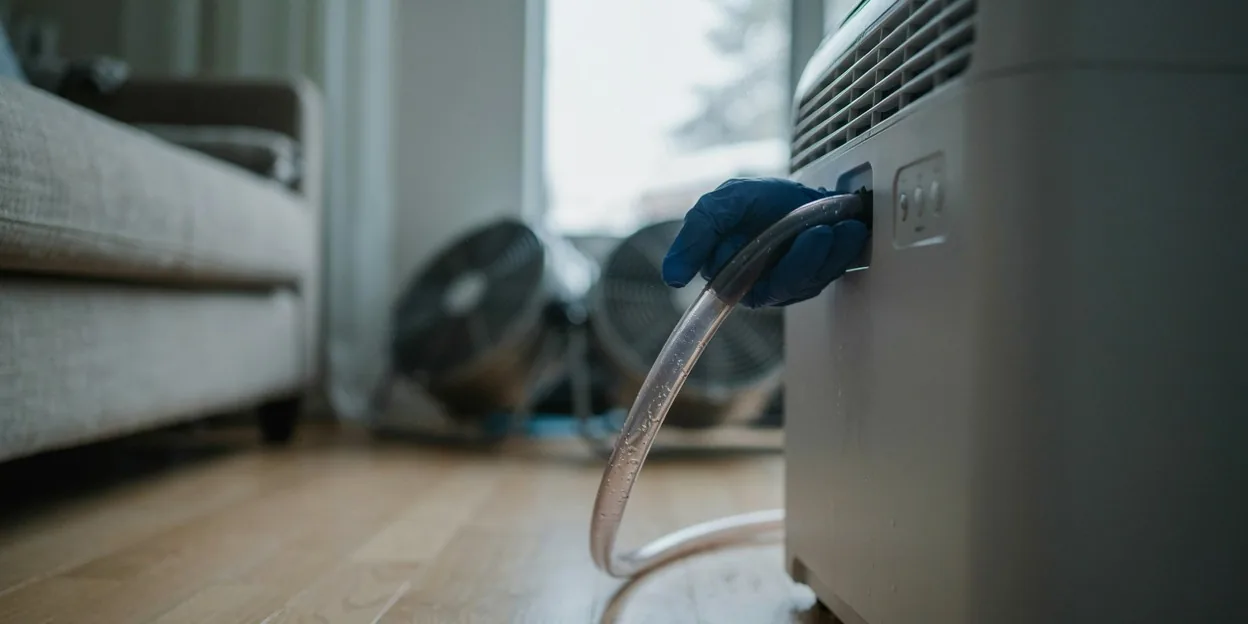
The puddle is gone. You mopped Sunday night, ran a box fan Monday, and by Wednesday the tile looked like nothing happened. Then the baseboard in the hall bowed out and the room started smelling like a wet cinder block. In a dry climate people assume things dry on their own. Block, grout, and drywall do not. This site routes your call to an independent local provider who does structural drying across Tucson and Pima County.
Reading the wall before setting a single fan
The provider maps the wet area first. A pin meter goes into the drywall at six-inch steps up from the floor until it reads dry, and a non-invasive meter sweeps the tile and the block. Those numbers set a target for every material, and drying is finished when the readings hit the target, not when the wall feels dry to the hand. Air movers go on the wet surfaces to pull moisture out; a dehumidifier pulls it out of the air so the surfaces can keep giving it up.
Cabinets and vanities get special attention. The toe kick comes off and a small hole goes in the back panel so air reaches the space behind the sink base. Where the drywall sat in water, the crew cuts a strip along the bottom, called a flood cut, only as high as the meter says. Anything that needs pumping first is water extraction, which comes before this step.
What to do before the equipment arrives
Do not paint, caulk, or reinstall the baseboard. Whatever the meter cannot see, it cannot dry. Leave the cabinet doors open. Turn off the swamp cooler, because it raises the indoor humidity, and run the refrigerated AC if you have it. Photograph the swollen baseboard, the bowed drywall, and any stain line. Then call.
Block that stays, particleboard that goes
Drywall that wicked less than a foot usually stays after a flood cut along the bottom. Block walls dry in place, slowly. Wood cabinets dry if the particleboard has not swelled; once it has, the box comes out. Tile stays. Carpet pad is replaced; carpet is often saved. Insulation in a wet exterior wall comes out because it holds water against the studs. Ask the crew to show you the meter readings on the wall and to mark the dry target so you can watch the number fall.
Why drying takes longer in Tucson than the weather suggests
For eight months of the year Tucson air is dry enough to pull moisture out of a wall on its own. The problem is the other four. From the first monsoon storm in late June until the pattern breaks in September, the dew point sits in the 60s, and drying a house without a dehumidifier stalls at damp. Add a swamp cooler running through the day and the room is wetter than the wall.
The other issue is what the houses are made of. Slump block and burnt adobe in the 1950s through 1970s midtown neighborhoods soak up water the way brick does and release it slowly. Stucco over frame in the 1990s to 2020s subdivisions in Rita Ranch, Oro Valley, and Marana hides a wet stud bay behind a face that reads dry. The meter, not the eye, decides when a wall is finished. When the moisture came from a roof that ponded during a storm, the drying starts after roof leak water damage work stops the source.
Adjusters ask for the drying log: readings by day, by room, with equipment counts. The provider keeps that from the first visit.
Call about the room that will not stop smelling damp
Say when the water came in and what you have done since. Mention a bowed baseboard, a soft spot in the drywall, or a smell that came back after the floor dried. Call (520) 422-6139 and tell us what still feels damp.