Burst Pipe Water Damage in Tucson, AZ
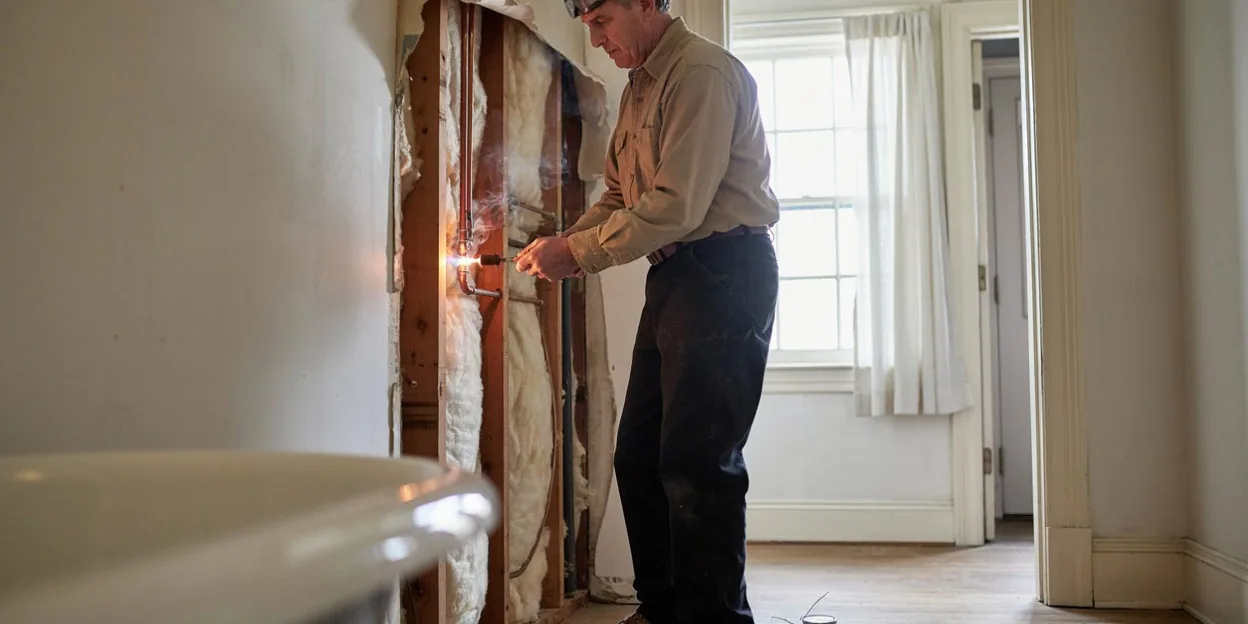
The overnight low hit the teens, the kind of cold Tucson sees once every few winters, and by ten in the morning the sun had thawed the copper riser on the north wall. That is when it split. Water ran down the stucco, under the sill plate, and across the slab into the back bedroom before anyone noticed the sound. This site routes your call to an independent local provider who handles burst pipe water damage across Tucson and Pima County.
Where the crew looks once the valve is closed
Water from a burst line does not stay where the pipe is. A split riser on the outside wall pushes water under the plate and along the slab. A split attic line, common in the 1990s and newer subdivisions where the plumbing runs overhead, drops through the insulation onto the ceiling drywall and follows the walls down. The provider meters every wall below and beside the break, not just the one that is visibly wet, and pulls back the attic insulation above any ceiling stain.
Standing water on the slab is pumped as water extraction. Wet drywall gets a flood cut along the bottom, wet insulation comes out, and the drying equipment goes in. The plumber fixes the line; the restoration provider dries what it soaked. They are two jobs, and the scope should say which is which.
The first thing to do in the next hour
Close the main at the meter box by the sidewalk or at the riser where the line comes up by the front wall. If the split is on a hose bib line or the cooler supply, that branch may have its own valve you can close instead. Kill the breaker to any room where water reached an outlet or a ceiling fixture. Photograph the split pipe, the wet floor, and any ceiling stain before anything is repaired. Then call and describe where the water went.
What can be saved after a split line
More than you expect. Tile and saltillo dry in place. Block walls dry in place. Drywall that wicked less than a foot usually stays after a flood cut. Carpet is often saved when the water was clean and the pad is replaced. Attic insulation that got soaked comes out because it holds water against the drywall and the framing. Cabinets survive if the particleboard did not swell. Ask the crew to show you the meter readings that decided each call.
Why a desert city has frozen pipes at all
Tucson's plumbing was never built for cold. Hose bibs come straight out of the stucco with no frost-proof fitting, cooler supply lines run bare across the roof, and in slab-on-grade ranches the water heater often sits in an alcove on the outside of the house. A hard freeze that would be routine in Flagstaff catches all of it exposed. In the first days of February 2011 a four-day freeze split lines across the whole city; water demand jumped from 76 million gallons a day to 111 million as pipes let go, and Tucson Water counted more than 300 breaks in its own reservoirs, boosters, and mains. January 2013 brought another four-to-five-day snap, and the utility logged 414 freeze calls in a single night.
Not every burst is winter. A hard-water pinhole in old copper can blow out at a fitting in July, and a supply line under a sink fails in any month. When the leak is slow and hidden, that is leak detection. When it drops through a ceiling first, see ceiling water damage repair.
A sudden burst is the kind of loss most Arizona policies are written to respond to, as long as the house was heated and occupied. The adjuster will want the photos and the readings from the first visit; the provider keeps both.
Call once the water is off
Say where the pipe split, whether the main is closed, and which rooms got wet. Mention if the water came through a ceiling or ran under an exterior wall. Call (520) 422-6139 and walk us through where the water went.